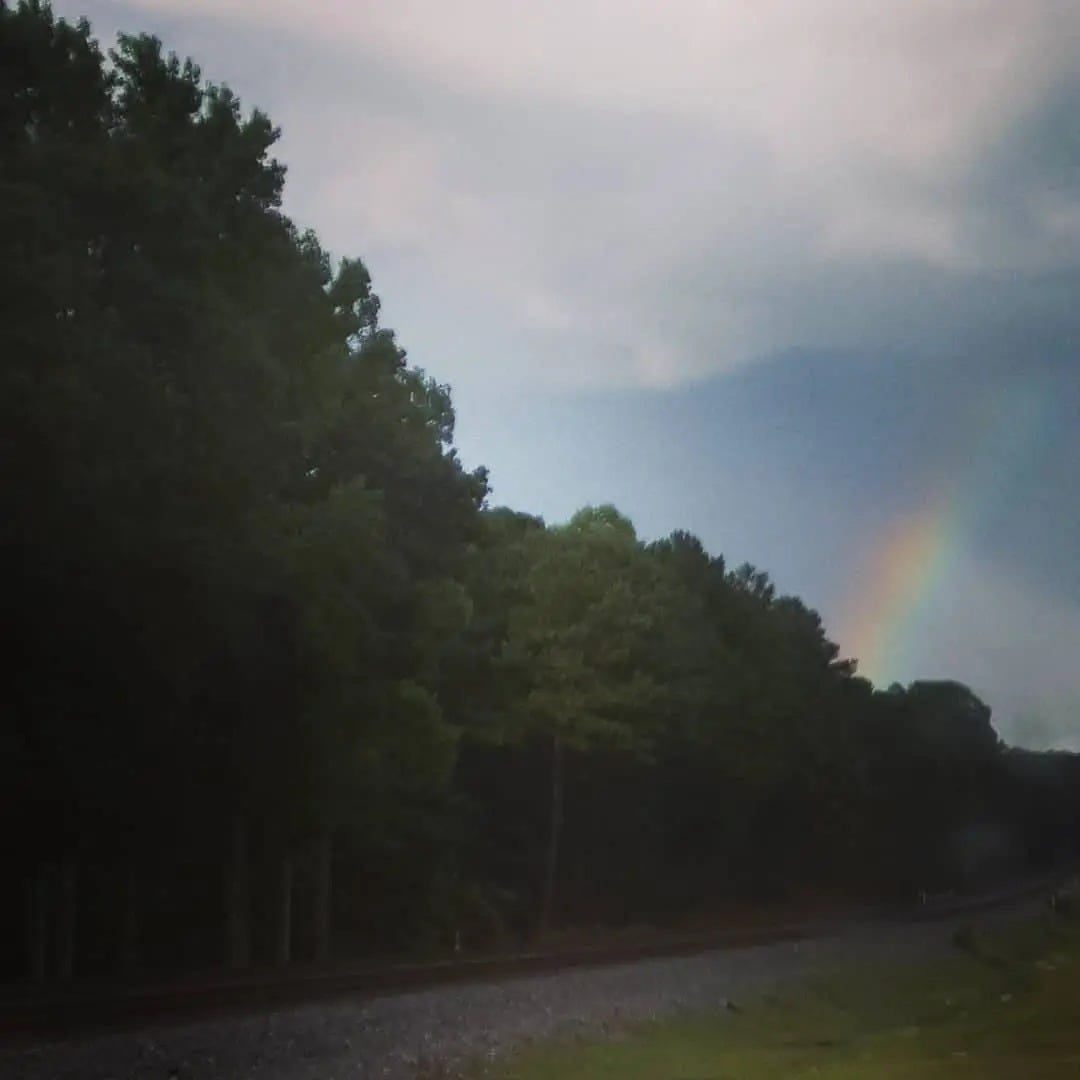

My number one, ongoing worship music playlist is titled, “Rainbows.” I started it in 2023, shortly after the tragic shooting at Covenant Christian Preschool in Nashville, TN.
As far as school violence goes, this incident pretty much marked all the boxes of the horrifying nightmare checklist, if there is one. I would say it is an event that deeply challenged my faith. If anyone is to be protected from this type of harm and devastation should it not be young children in a community of faith? The pain and the questions that emerge from such acts are complex and heavy.
But God sent a sign to the community of Covenant Christian that they were not forgotten or abandoned. It was the same sign he sent Noah after the worldwide devastation of The Flood.
“Then God said, ‘I am giving you a sign of my covenant with you and with all living creatures, for all generations to come. I have placed my rainbow in the clouds. It is the sign of my covenant with you and with all the earth. When I send clouds over the earth, the rainbow will appear in the clouds, and I will remember my covenant with you and with all living creatures. Never again will the floodwaters destroy all life. When I see the rainbow in the clouds, I will remember the eternal covenant between God and every living creature on earth.’ Then God said to Noah, ‘Yes, this rainbow is the sign of the covenant I am confirming with all the creatures on earth.” Genesis 9:12-17
I find it lovely that God chose the rainbow as the sign of his promises. Though there is good, hard science to explain the appearance of a rainbow, there remains something entirely mystical about the experience of seeing one. It is otherworldly, in a way, outside of the usual behavior of our atmosphere. It takes a special condition of water and light to produce the effect, and often, it is subtle, faint, easy to miss if we are not paying attention.
I also find it lovely the scripture writes of the symbol as a remembrance.
I will remember my covenant with you.
But surely the Ancient of Days, God of the Universe, Knower of all things, Sovereign and Omniscient could never “forget?”
One definition of remember is to “bring to mind an awareness.”
The sign of the rainbow, then, becomes a place where both God and man can simultaneously bring to mind an awareness of God’s promises, his covenant, his love, and eternal plan. Though while we are living, a veil still divides us from the full reality of our spiritual life, the rainbow becomes like a bridge between the two worlds, with instant communication between them.
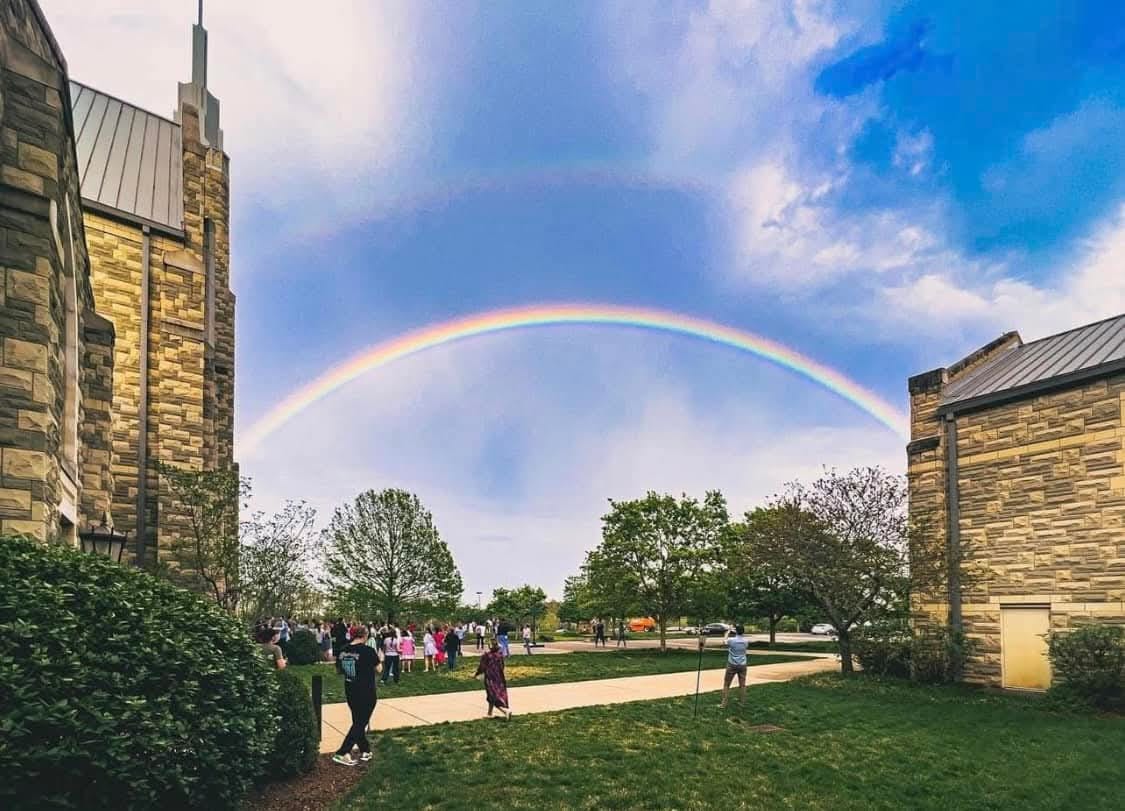
As shared in an original post by Christian author Karen Kingsbury, three weeks after the Nashville shooting, the first time the community returned to the school, and at the very moment they began to enter the building, a double rainbow appeared, covering them in its short lived brilliance, brought on by a brief, obscure rain shower that had passed through moments before on an otherwise perfectly sunny day.
Original post by Karen Kingsbury
Reading about that story was the moment the connection between my worship and God's promises was woven inseparably together. I knew already from my own life experiences that our faith cannot be conditioned by our circumstances. I knew from reading my bible that our faith cannot guarantee freedom from trials and tribulations. I trusted and understood that what God has promised, he will bring to full completion.
But seeing the display of his promise literally overarching the ruins of an evil we cannot comprehend reminds us of the true core of our worship as Christians - the love that endures despite the pain, that promises a future of healing and restoration. It shakes us awake to the reality that this place, though part of our spiritual journey, is not our final home. It reminds us that here, we are nomads in a foreign land.
“All these people died still believing what God had promised them. They did not receive what was promised, but they saw it all from a distance and welcomed it. They agreed that they were foreigners and nomads here on earth. Obviously people who say such things are looking forward to a country they can call their own. If they had longed for the country they came from, they could have gone back. But they were looking for a better place, a heavenly homeland. That is why God is not ashamed to be called their God, for he has prepared a city for them.” Hebrews 11:13-16
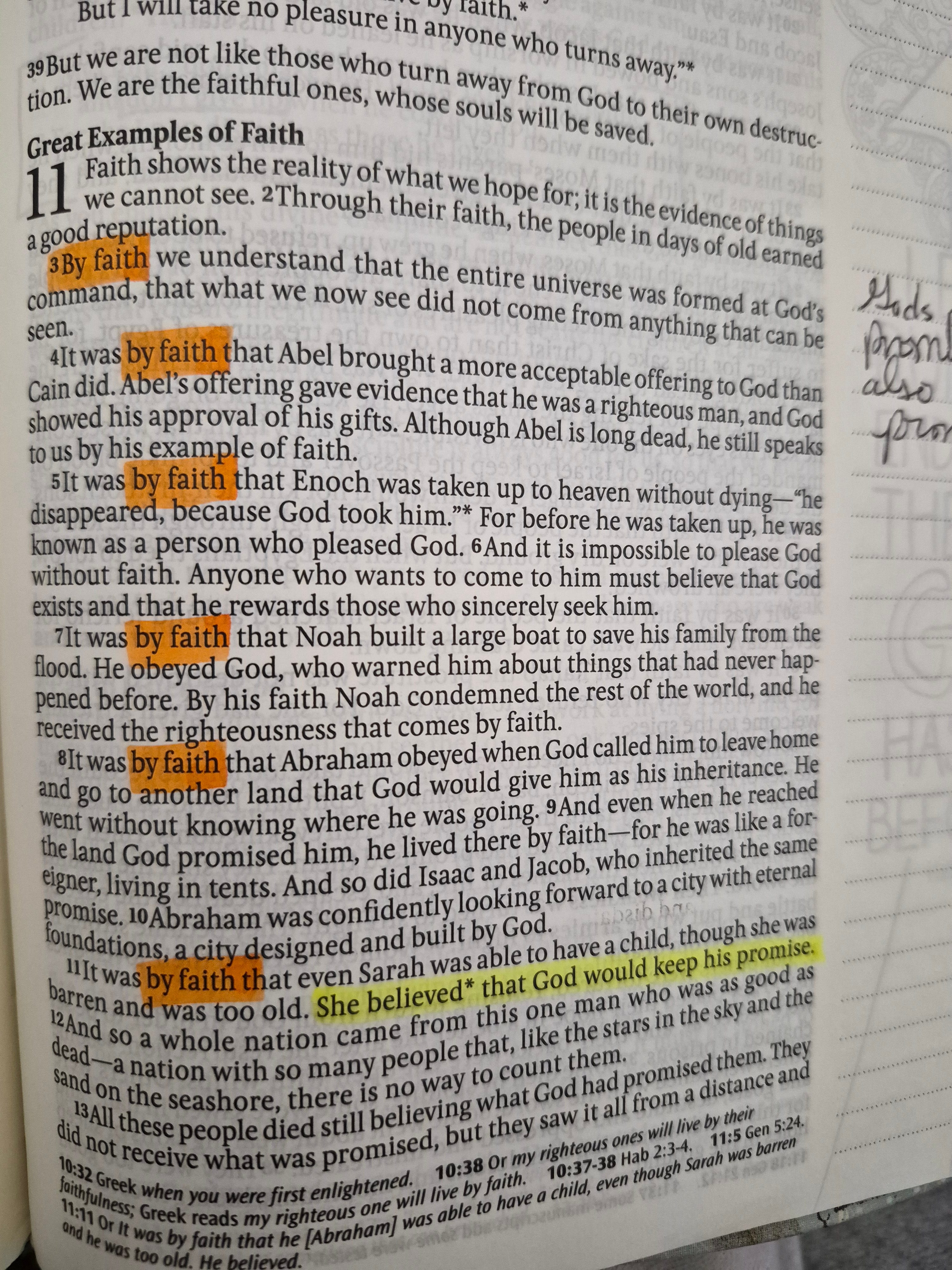
Hebrews 11 is sometimes called “The Great Hall of Faith.” It recounts the amazing instances in scripture when men and women acted in incredible faith, despite their impossible circumstances.
To act in accordance with this type of faith is to exercise a special kind of devotion.
A devotion that believes, if God has promised it, it doesn’t matter how long it takes. Any complaints we have about a timeline is a result of our own impatience.
A devotion that believes, if God has promised it, it doesn’t matter how many things happen between now and the time it comes to fruition. Any complaints we have about the process is a result of our dissatisfied desire to control our own path.
A devotion that believes, if God has promised it, it doesn’t matter what it ultimately looks like. Any complaints we have about outcomes are a result of our own, limited expectations.
God’s promises are made on a small, intimate, personal level but also on a large, broad, worldwide level. To believe everything should work out individually for us as we see fit, is to center ourselves in the part of the story that belongs to God, and to ignore the interdependency of how he designed this world and all of the beings within it.
It is a beautiful thing that God cares for our smallest and most personal details. It is his gift to us. But it does not give us license to expect the world at large to accommodate our personal stories. Sometimes, there must be a flood, but by faith, if we cling to his promises, we will see the rainbow.
Walking through the Great Hall of Faith in scripture, I am paused by verse 11, which describes Sarah’s miraculous ability to have a child, though she was barren and old. What the text reads next, I believe, is the key to unlocking exactly how we survive the unsurvivable. It is a great way to summarize the motives for all the examples of great faith the book highlights:
“She believed that God would keep his promise.” Hebrews 11:11
This is the recipe for our continuous worship.
How do we go on in the aftermath of unimaginable tragedy?
We believe that God will keep his promise.
How do we move through the excruciating pain and disappointment of our grief?
We believe that God will keep his promise.
How do we face a problem when we have tried everything and are out of answers completely?
We believe that God will keep his promise.
How do we cope with a diagnosis, a loss, an estranged family member or child?
We believe that God will keep his promise.
How do we garner the courage to face what we know we must, to battle what seems impossible to win?
We believe that God will keep his promise.
How do we put one foot in front of the other when we are exhausted, beaten down, and defeated?
We believe that God will keep his promise.
It is no small feat, what he is asking us to do. To devote ourselves to a faith, which is defined in Hebrews 11:1 as “the substance of what we hope for, the evidence of things unseen,” requires leaning into less obvious, less provable, more felt, more numinous aspects of our lives. But he has given us every reason to believe.
From the rainbow of his covenant, to the resurrection of his crucifixion, he has made the promise with his own creation, blood, and spirit.
Through every hardship, setback, disappointment, and grief of this life, let our worship be the refrain that sustains us,
We believe that God will keep his promise.